

Still talked about and remembered in technicolour by a large chunk of the UK 50+ demographic, the famous 1970s TV interviews between Muhammad Ali and Michael Parkinson were feisty affairs and the 1971 conversation is still compulsive watching.
THAT encounter was special because both sporting legend and interviewer were at the top of their game.
The long-form studio interview had its heyday in the last decades of the last century when TV hosts gobbled up prime-time slots. Parky was a master of the studio interview on television; a format which has now drifted into late night schedules (Jonathan Ross Show) or is relegated to shortened inserts in magazine shows (The One Show, This Morning, Newsnight).
Reliant on a skilled and informed presenter, the studio interview is still a challenging piece to pull off and a delight to watch if it achieves a level of authenticity.
With one-on-one interviews there is nowhere to hide.
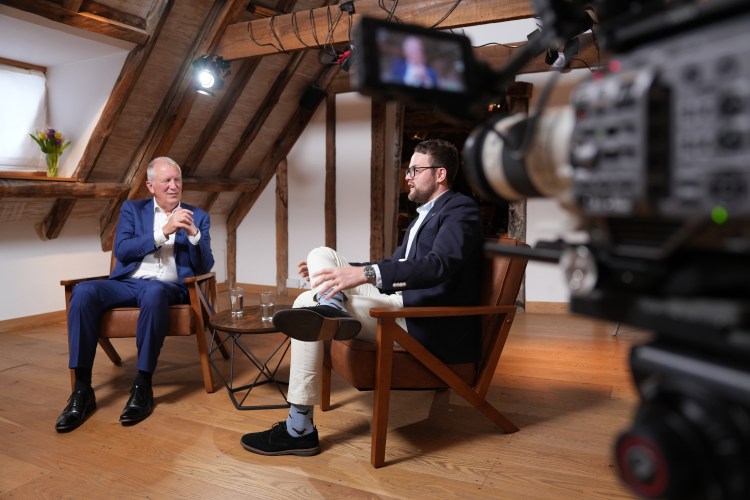
The longer they are, the more a personality is revealed. It’s surely why the political interview is a cat-and-mouse affair with only a handful of carefully selected representatives allowed anywhere near professional presenters.
With the advent of streaming platforms, the studio interview has migrated from TV to the board room and beyond. As video is increasingly used for corporate communications, CEOs have the option to appear with a friendly interviewer to discuss company performance. It often makes for a better viewing experience than a lecture direct-to-camera using autocue.
But whether on a TV station or corporate platform, some rules apply to producing good video interviews that engage the viewer.
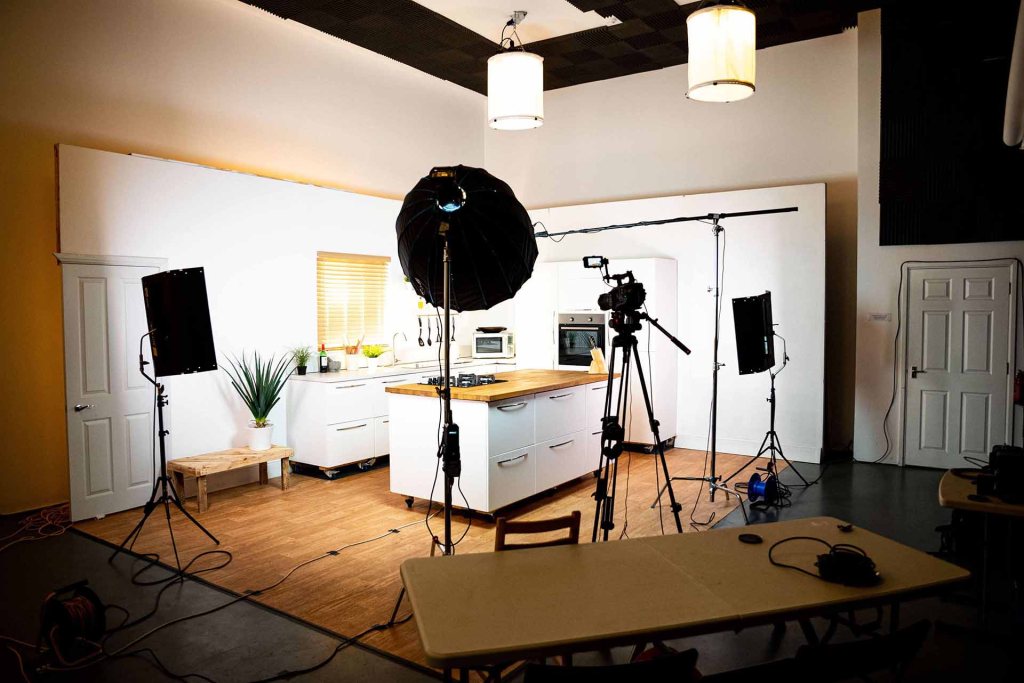
- Location is important. Professional studios are well worth the effort of getting the interviewee to travel. At the very least the space should be quiet, easy to light and have a meet and greet area.
- Both presenter and interviewee need time to prepare – this means outlining the shape of the interview prior to sitting down infront of the camera.
- Intros and Outros should be agreed at this stage.
- If consent forms are required get them signed in advance of filming.
- Make the subject feel comfortable and relaxed; a good studio manager or assistant producer can positively influence the atmosphere before the interview starts.
- Explain clearly how the event will unfold from Green Room to studio to being mic’d up.
- A good interviewer will listen and not interrupt but keep the conversation going with a well-timed question.
Whilst the rules for producing a good video interview apply in the professional world of broadcast and still carry weight, in the domain of corporate communications they are not so easy to enforce.
Time poor, under pressure and risk averse, senior management is frequently out of its comfort zone in front of cameras, even friendly ones.
Whilst company comms teams understand the importance of preparation, the interviewees (Managing Director/CEO/Operations Director) often turn up without having read questions or prepped answers. Many cancel at the last minute and very few agree to travel to a professional studio because of time constraints.
And yet, what they say matters to their workforce and stakeholders. By taking time, senior management can address corporate performance in an environment they can control using the global, high engagement medium of video.
It’s worth noting that a good studio interview can change opinions and boost credibility.
These days business leaders should add media training to their long list of skills.
Impatience with the recorded interview process is a deep misunderstanding of the importance of mass communication as a leadership competency. It might not seem important when juggling board meetings, shareholders and decision making, but poor performance on camera can impact wider perceptions both within and outside a company.
Equally, video producers who relegate interviews to an exasperated roll-of-the-eyes that indicates ‘this sort of filming is just not as exciting as other creative fare’, should buck up their ideas.
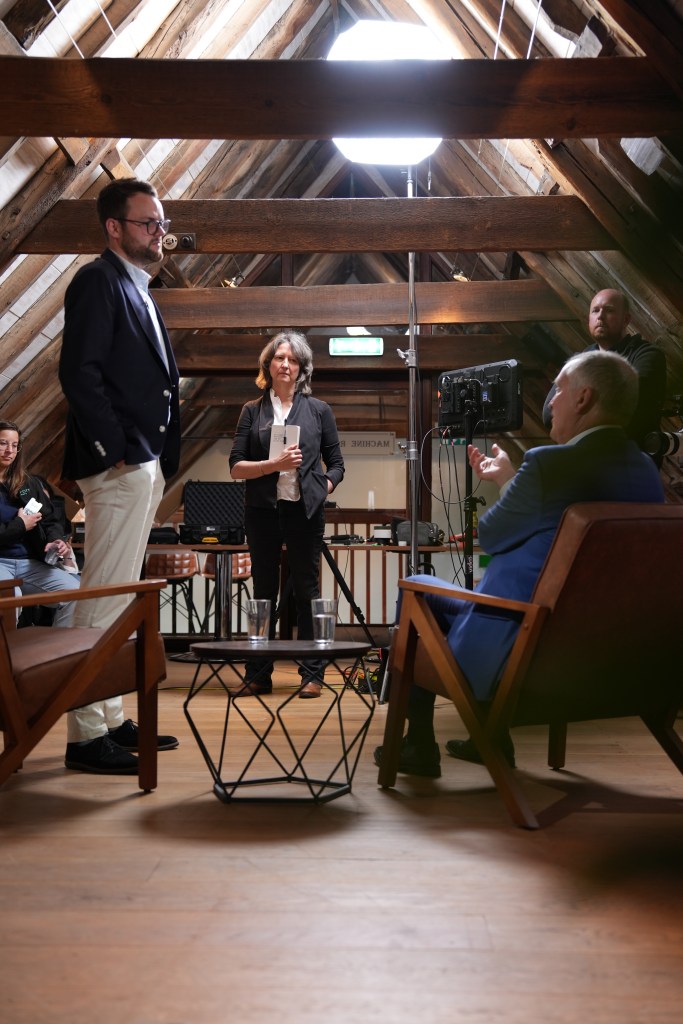
Good technical set up for live or recorded interviews is not easy.
Space, lighting, sound, camera positioning whilst not being too invasive and off-putting for the interviewee, is a skill.
Studio camera operators are prized for their ability to quietly and competently get on with it without fuss. And news gallery operators are highly skilled technicians.
And as always every interview is a challenge and a learning opportunity for the director and crew.
With our Woodbridge Visual Media hat on, we’ve just completed an 8-part interview series for the VARTAN Consultancy and Suffolk Chamber of Commerce in a small, stylish studio in Ipswich. These one-to-one interviews with remarkable businesses in the East Anglia area aim to recreate the conversational warmth and space to dig deep into a subject which is often missing from shorter corporate soundbites.
Like the best TV celebrity interviews of old, each interview focusses on a dynamic business leader and their own description of what they do.
It’s amazing to find out in their own words, the many specialist engineering businesses that exist less than 50-miles from some of the giant Suffolk infrastructure projects that are coming on stream.
 Woodbridge Visual Media Ltd